
Lost Fatherlands
By the Time It’s Clear

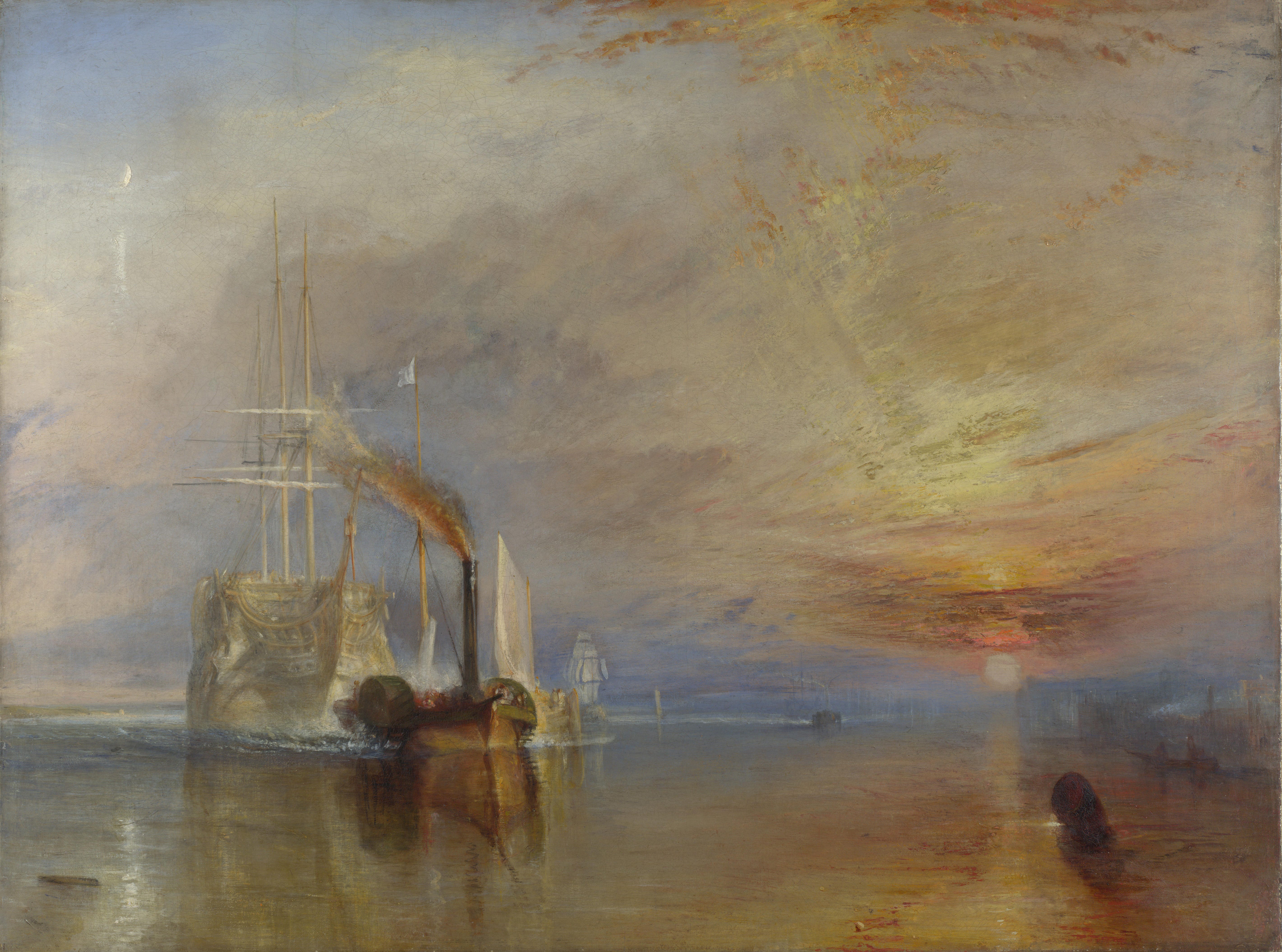
As American bombs fall on Iran and the world economy reels from the Hormuz blockade, I’ve thought a lot about my dad. He spent twenty-something years as a naval aviator before retiring from the military to work as a consultant in the defense industry: a respectable bourgeois, an upstanding citizen, a lifelong Republican, at least up until Trump. The sun rises; he gets up early and exercises. These days he mostly works from home, but even then he dresses for the day in dry-cleaned shirts. I don’t think I’ve ever seen him wear blue jeans. He works for eight hours and then he drinks a beer and reads or watches baseball. The sun sets; he goes to bed early, and the cycle repeats. These mannerisms extend outward into a kind of civic cosmology: the United States must appear dignified and respectable to its allies and intimidating to its adversaries. Such is the proper and harmonious order of things.
This is, in a sense, the war he spent his whole career preparing for. But now that it’s actually here, every update makes me imagine his horror—what it might feel like, from his position, to watch that world come apart.
I remember the summer of 2015, when I had just graduated from William & Mary, and the JCPOA, Obama’s Iran deal, had just been signed. I was living at home and applying to low-paying journalist jobs in DC and New York, with no idea what I was going to do with my life. My older brother got a job offer from PwC months before he graduated, my mom would tell me, and so did all his UVA fraternity brothers. She had thrown away my favorite Velvet Underground shirt from Urban Outfitters. It was time for me to start dressing like a proper bourgeois—though my parents had also written off the possibility of me ever getting a security clearance, which meant no possibility of really moving up in the DC professional world, the only world they know. The reason was drug use, mostly. My mom would regularly search my room and possessions and find a gram of weed and a cheap glass pipe, and she would clean and keep the glass pipes as a monument to her parental vigilance. I’d argue that dad smoked weed when he was in college, and the guy introduced me to the Grateful Dead, and she’d say yes but he never took LSD. She had read my notebooks and diaries and electronic correspondences, which had evidence of psychedelic drug use and homosexuality. I read Moby Dick that summer. My dad didn’t like the Obama Iran deal because it signaled weakness, trust in an untrustworthy regime, it was alienating to our allies. In his thinking, Iran wasn’t a “rational actor” in international relations, it was committed to building an atomic bomb and it would then drop it on Israel. By then I had long since abandoned dad’s normie Republican War-on-Terror military officer ideology I had internalized as a kid. I didn’t take the tough guy talk seriously, and I didn’t owe the state of Israel anything. I remember my younger brother and me arguing with my dad about it, telling him that Israel was basically a fascist apartheid state and not a democracy at all, much less “the only democracy in the Middle East.” My dad would respond that this was antisemitic, that we didn’t understand the history, that arguments like that bordered on Holocaust denial. When I had suggested that it might be in the interest of international security for Iran to have a nuclear weapon, it was dismissed as unimaginably obscene.
I got a job copyediting World Bank reports by the end of the summer and moved from the outer suburbs closer into DC. Trump was running for president and leading the Republican primary field. Trump was abhorrent, but there was something satisfying in seeing his rebuke to the Republican war hawk establishment. He called the Iraq War a “big fat mess,” he showed outright contempt for the troops, and he personally humiliated an idiot son of the Bush dynasty. About John McCain, he said, “He’s a war hero because he was captured. I like people who weren’t captured.” I didn’t consider any of those things sacred. Ironically, these sentiments were far more flippant and disrespectful than anything I’d say to my dad, and they were winning over the Republican voters. For my dad, Trump winning the Republican nomination and then the presidency was a national humiliation, pure and simple.
At the time, I was horrified by what I saw as the rise of fascism, but on some adolescent level I was also perversely satisfied that my dad’s imperial worldview had been rebuked. Trump was the monster this fucked-up country deserved. I also resented my neighbors in Arlington, Virginia. I hated how they dressed. They wore what we call in New York the “midtown uniform,” but it didn’t have a name in DC because it’s the only way that anyone dressed. I hated their smug banality, I hated how they were the sorts of people that my parents wanted me to be like. I nursed idle fantasies of writing Beatles lyrics on the walls of their tastelessly decorated apartments with their blood. “That’s so nostalgic,” I remember a friend telling me. “The incel mass shooter fantasy is far more contemporary.”
At the same time, though, I respected the fact that my dad remained true to his principles—delusional as some of them might have been—instead of going full MAGA. On the night that Trump won I remember hearing moans of agony outside my window. The bourgeoisie of northern Virginia were weeping. I was stoned. The next day I got dressed and went to my job copyediting World Bank reports.
When I visited my parents, my dad would constantly complain about Trump. During that first term he became a particular kind of liberal. He developed what I can only describe as a cargo-cult relationship to the New York Times. He remained hopeful that the institutions of the U.S. government still contained enough responsible people to thwart what he saw as Trump’s “carnival barker” fascism. I was impressed at his willingness to call Trump a fascist, though I disagreed with the way he pinned the blame on the Russians. To me that just seemed like his old Cold War habits, a way of avoiding the homegrown depravity in the hearts of his countrymen. But it was my dad’s worldview that was validated by the mainstream liberal media. He was always telling me and my brothers that we really needed to read the New York Times, it was practically a civic duty. He was optimistic about the Democratic Party’s lawfare efforts: the investigations, the impeachment proceedings, the Mueller report, and so on. My mom would sometimes say things like, “Someone should just shoot Trump,” and my dad would immediately shut it down: “No—don’t even joke about something like that,” he would say, as if the house was bugged, “That would be very bad for the country.”
But that framework didn’t hold everywhere. The arguments my brother and I had with my dad about Israel eventually gave way. Once Trump took office—and became very popular among Israelis—my dad conceded that the Palestinian cause was at least legible, even if the Israelis were still our allies. Before, Israel was Europe-adjacent, and now it was Trump-adjacent. It was no longer unconditionally morally righteous. Instead, he would talk glowingly of their intelligence expertise from a removed, critical perspective, as if he were appreciating a fine wine. “You know Mike, the Mossad is actually a very capable intelligence agency…”
And the shift didn’t stop there. By the time 2020 rolled around, my dad was actually “woke.” In 2016 he had scoffed at Bernie Sanders while voting for Hillary Clinton, even claiming the guy was as bad as Trump; by 2020 he was willing to accept Sanders and his supporters as legitimate members of the popular front. He started talking more sympathetically about various radical figures from American history, like John Reed. Now the real threat to the civic order, to the Constitution and the stars and stripes and liberty and justice for all, was not communism, but fascism. He became aware of racist and misogynistic chauvinism among some of his colleagues—things he felt had been unleashed by Trump, though he sometimes wondered if they had been latent all along and he had simply failed to notice them. He fell out with old friends. The two of us would bond over Civil War history, and by this point he had come to see Trump and his cronies as modern Confederates. We’d walk the nearby Manassas battlefield. I got him the Eric Foner Reconstruction book.
For a moment, it seemed like that framework might hold. With the Democrats back in power the next year—and after the strange, theatrical reprise of the old Klan and Red Shirt violence, a kind of costumed mob scene at the Capitol—some semblance of order seemed to have been restored. I remember telling dad that Trump would almost certainly run again, and that if he did he might very well win. My dad brushed this off somewhat, though I don’t think it was because he believed it was impossible. More likely he was consciously repressing the thought. The looming prospect of Trump’s return to power was simply too awful and too humiliating for him to dwell on.
I haven’t had that much contact with my family since moving to New York in 2022, for complicated reasons that mostly boil down to the fact that the life I live here isn’t exactly respectable—or at least it doesn’t seem so to my parents. It’s hard to talk to them about what I’ve been up to, because what I’ve been up to usually involves the sorts of things they’d rather not hear about. My New York life entails humiliating myself and making myself a kind of clown, for literature I guess. And even though they respect the New York Times and the media and all that, they don’t really understand that what I’m doing is also, in some sense, part of that world. If I started getting bylines in the Times or landed a book deal or something, then I could go back to them with something dignified to show for myself. But until then I just have to keep grinding. I’m pretty sure they’re at least a little ashamed that I’m publishing this stuff under my real name. At the same time, writing like this can’t really be anonymous if it’s going to have any credibility.
The credibility also comes at the cost of occasionally being the subject of anonymous parapolitical researchers trying to decipher the psyops of contemporary life. A savvy OSINT noticer’s web might include the following: Mike Crumplar, the so-called “leftist” Dimes Square scene reporter, pictures of my dad in uniform, the Northrop Grumman EA-6B Prowler, Operation Desert Storm, electronic warfare systems, the thesis my dad wrote at the Naval War College, the address of my childhood home, a picture of me with Dasha Nekrasova, a picture of me with Brace Belden, a picture of Brace Belden in Syria with the People’s Protection Units holding a machine gun, Peter Thiel, Curtis Yarvin, diagrams of the Urbit network, Rob Mariani in Disco Elysium cosplay, archive links to the proto-Dimes Square neoreactionary blog Jacobite, The American Conservative, Curt Mills interviewing Tucker Carlson, the address of my apartment in Arlington, yearbook photos, a YouTube link to the short experimental film “Sunshine and Lollipops” I made in 2009, country assignments for the TJHSST Model UN Club, course offerings for the College of William & Mary German Department, the Fall 2012 Spinoza Seminar syllabus, a graduation picture of me with Professor Rob Leventhal, Captain Beefheart, John Perry Barlow, the Electronic Frontier Foundation, MKUltra, the Manson murders, archived death threats from Twitter user “Bimbo Terrorismo,” Sighswoon selfies, a flyer for a Mexico City poetry reading featuring “Padrote Drogado,” the Maoist slogans on the walls of Hinds Hall, pictures of my ex-wife uploaded to her private Instagram page.
It doesn’t explain anything, but it does start to cohere. Not as truth, exactly, but as a kind of persona I’ve made it possible to assemble. This kind of dossier, rather than my actual writing, is what makes its way back to my parents. My younger brother seized on it to try to get them to make me stop writing, to stop humiliating the family. He claimed he was being gangstalked by Nazis because of me, that he was going to lose his job, and that my dad would lose his security clearance. The whole thing just confused my parents. They didn’t seem to believe my brother, but they asked me to stop writing to appease him for the sake of filial peace, and I refused. I can’t face my parents and keep answering “So, we saw some things about you on the internet that we’re concerned and confused by…”
I last saw my parents in April 2025 in New York. It was awkward at first. They asked about high school and college friends I hadn’t spoken to in years. The people in my life now are completely alien to them. Eventually we got to politics, and the conversation loosened. I was curious about my dad’s impressions of the second Trump administration. I already knew that television personality Pete Hegseth had been appointed Secretary of Defense, and that DOGE was axing federal government programs. General CQ Brown had been removed from his position as Chairman of the Joint Chiefs of Staff, and other high-ranking military commanders who were not white men were being fired and replaced by Trump loyalists. Memorials to Black veterans were being removed under the pretext of a crackdown on “DEI,” and the Confederate ones were coming back. And that was just from the headlines.
My dad showed a kind of despair I had never seen during the first Trump term. How can I represent what he said here? You would need poetic, allegorical language to do it justice. He made predictions, some of which have already come to pass. And the ones that haven’t yet—the unthinkable, the abyss. He had come to accept that there was nothing left between the world he understood and its end. To represent his disillusionment would be like showing him naked. I’m already closer to that than I should be.
And now, in March 2026, with the Trump administration launching a “special military operation” in Iran, I can hear my dad’s voice in my head commenting on every update. Yet I can only imagine this. I can’t reach out for his opinion, and I can’t ask his permission for this now. I see him pacing restlessly around the house, never quite comfortable in any room, talking to whoever will listen. I am sitting on the porch. It’s warm, early spring, and my dad is shaking his head in disbelief. He’s narrating the day’s atrocities and humiliations from the pages of the New York Times as we listen to a Grateful Dead concert recording. Then he sets the paper down. He can’t look at his phone. His whole life’s work—the system of security guarantees that comprises the American empire—evaporating. For a moment he seems to take it in stride, as if it had all happened before and would happen again. I imagine our cat, long dead, slipping off the porch and into the garden, my dad chasing after him. He picks him up, brushing the dirt from his fur. He gently scolds the cat for its disobedience. A heron flies over the pond in the backyard; beyond it, distant mountains are still visible through the trees.
故國山河如畫,醉來忘卻興亡
Like a painting: mountains and rivers in my lost fatherland; in drunkenness I forget the rise and fall of states.
Wow, amazing story about the stilted personality cultivated by DC life, the uniform you describe is an interesting part there is a certain look that also first